Cold Soak, Cap Management, and Enzyme Timing: Practical Decisions for Red Wine Fermentation
For an industrial winery, enzyme timing is not a lab-side detail. It affects tank turn, press loading, color development, lees volume, filtration pressure, and the sensory path of a red wine lot.
Cold soak adds another layer of choice. The fruit is cold, the cap is forming, juice is beginning to solubilize skin material, and the cellar is moving quickly. Add too early without control, and you can push extraction before the lot is ready. Add too late, and you may miss the window where enzymes can reduce structural drag on the must.
Véraison Current works as an enzyme supplier for wine production with a practical focus: help production, lab, and QA teams match enzyme selection and addition timing to fruit condition, equipment constraints, and finished-wine targets.
Why cold soak changes the enzyme decision
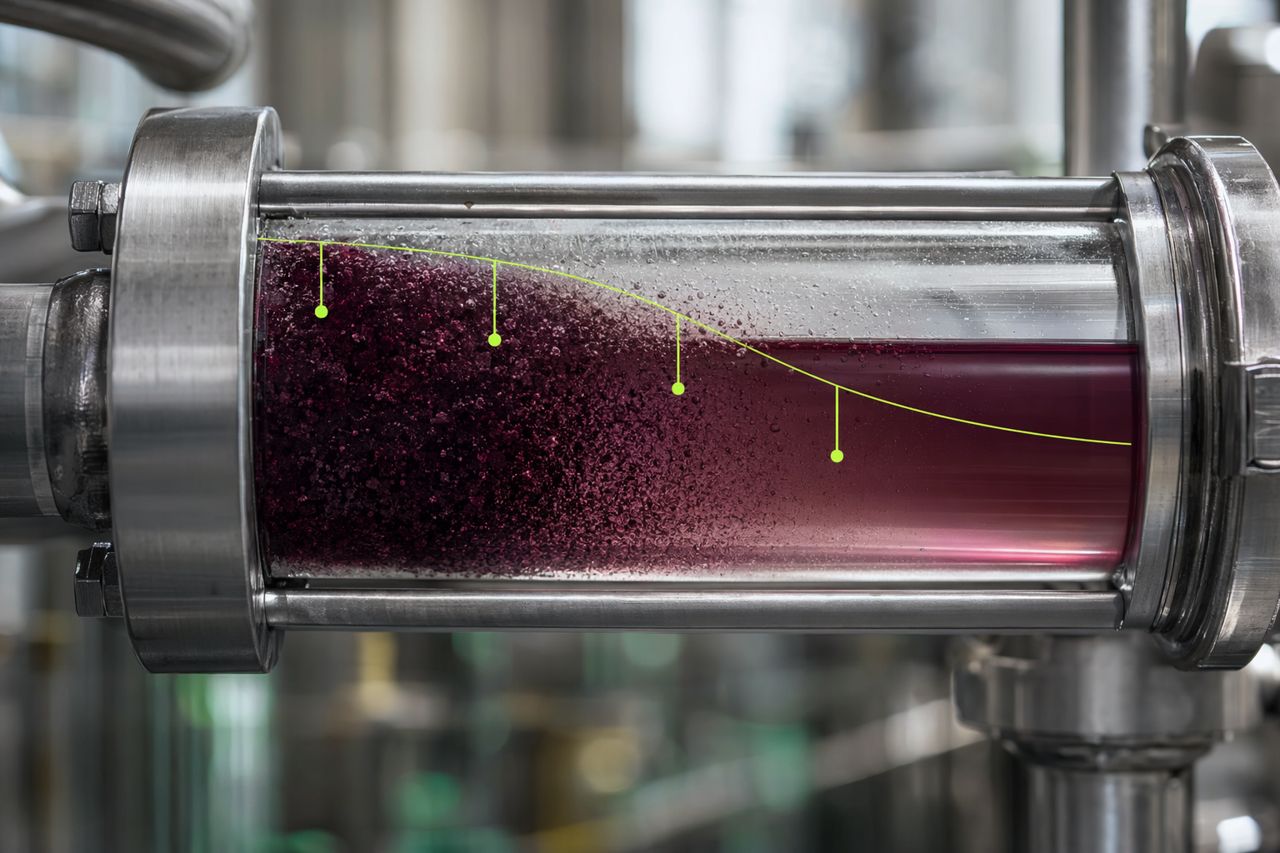
During cold soak, red must is still physically dense. Skins, pulp, seeds, and juice are not yet moving as a stable fermentation matrix. Pectins and other cell wall materials can increase viscosity, hold liquid in the cap, and carry haze-forming material forward.
A well-chosen maceration enzyme program can support:
- Faster release of juice from berry tissue
- More controlled color and phenolic extraction
- Improved press yield at drain and press
- Lower clarification load after pressing
- Reduced solids-related stress on filtration
- More predictable tank scheduling during harvest peaks
The question is not simply whether to use enzymes. The better question is: when does the must have enough contact, mixing, and temperature stability for the enzyme to create value without increasing sensory risk?
Three practical timing windows
1. At crush or during tank filling
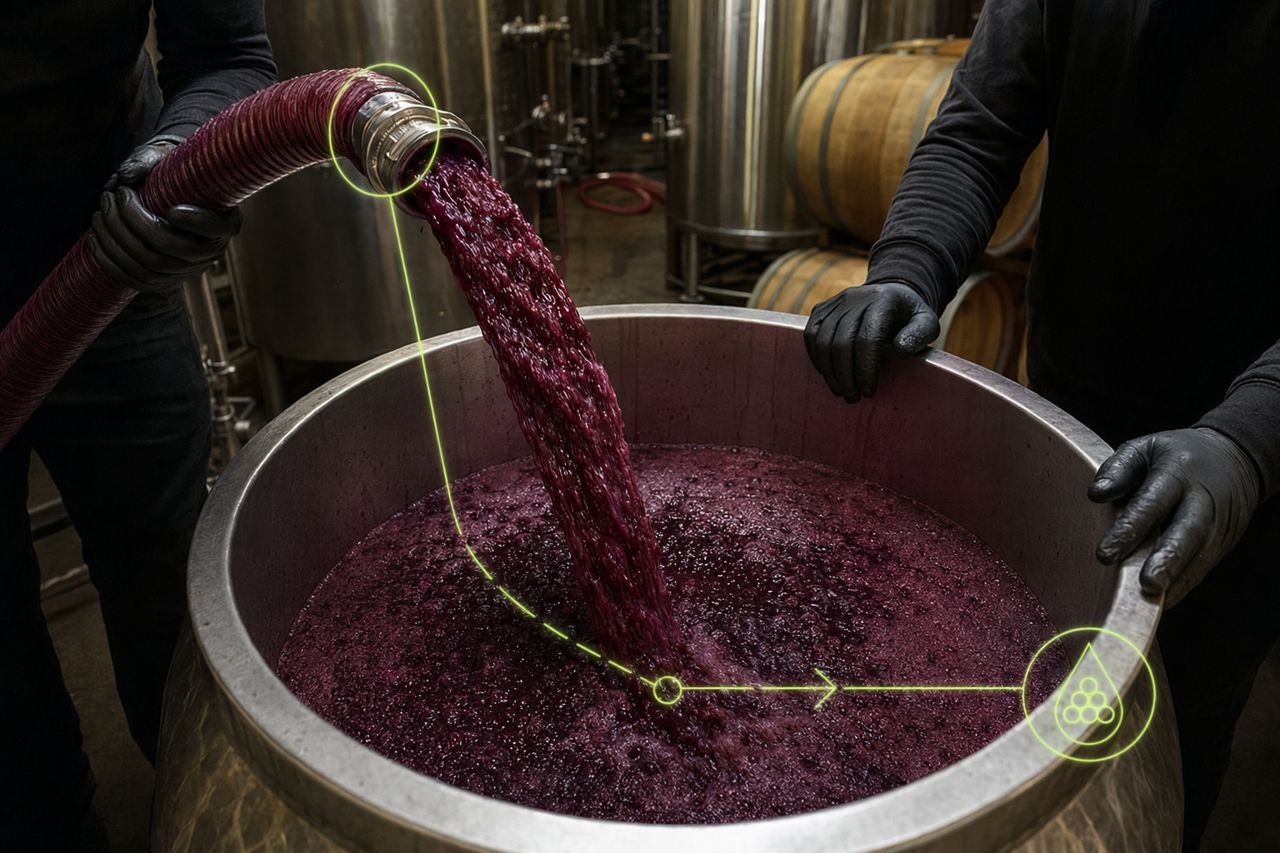
This is often the most efficient window for large lots because distribution is easier while must is moving. If the fruit is sound, the target style supports early extraction, and the winery has good temperature control, an early addition can help soften the physical structure of the must before fermentation accelerates.
Best fit:
- Sound fruit with consistent maturity
- Lots where color release is a priority
- Tanks with reliable mixing or pump-over access
- Production plans that benefit from better free-run recovery
Operational watchouts:
- Avoid treating compromised fruit as if it were clean fruit
- Confirm that cold-soak length matches the desired extraction curve
- Track seed harshness and early tannin movement in daily tastings
2. After cold soak, before active fermentation
For many commercial red programs, this is the balanced window. The winemaking team can inspect the lot, taste early extraction, review fruit condition, and then decide whether enzyme support is needed before fermentation kinetics become dominant.
Best fit:
- Variable fruit condition across blocks or bins
- Premium lots where sensory control is more important than maximum extraction
- Cellars that want enzyme benefit but prefer a decision point after must evaluation
- Programs using differential cap management by lot tier
Operational watchouts:
- Distribution becomes more dependent on pump-over or rack-and-return quality
- Cold tanks may respond more slowly than warmer must
- Delayed addition may reduce the enzyme’s impact on early juice liberation
3. During early fermentation
Early fermentation additions can be useful when the team wants to preserve flexibility through cold soak or when must movement improves once CO₂ and pump-over cycles begin. This window can support extraction and downstream clarification, but it should be managed carefully because alcohol, temperature rise, and cap dynamics are all changing.
Best fit:
- Lots that need a clearer read before intervention
- Dense caps where early movement is limited
- Tanks where pump-over frequency increases after inoculation
- Fruit with uncertain extraction potential
Operational watchouts:
- Sensory monitoring becomes more important as phenolics move faster
- Press timing should be aligned with the extraction target
- Late enzyme effect may be more visible in pressing and clarification than in early color formation
Cap management and enzyme performance are linked
Enzymes do not replace cap management. They make cap management more consequential.
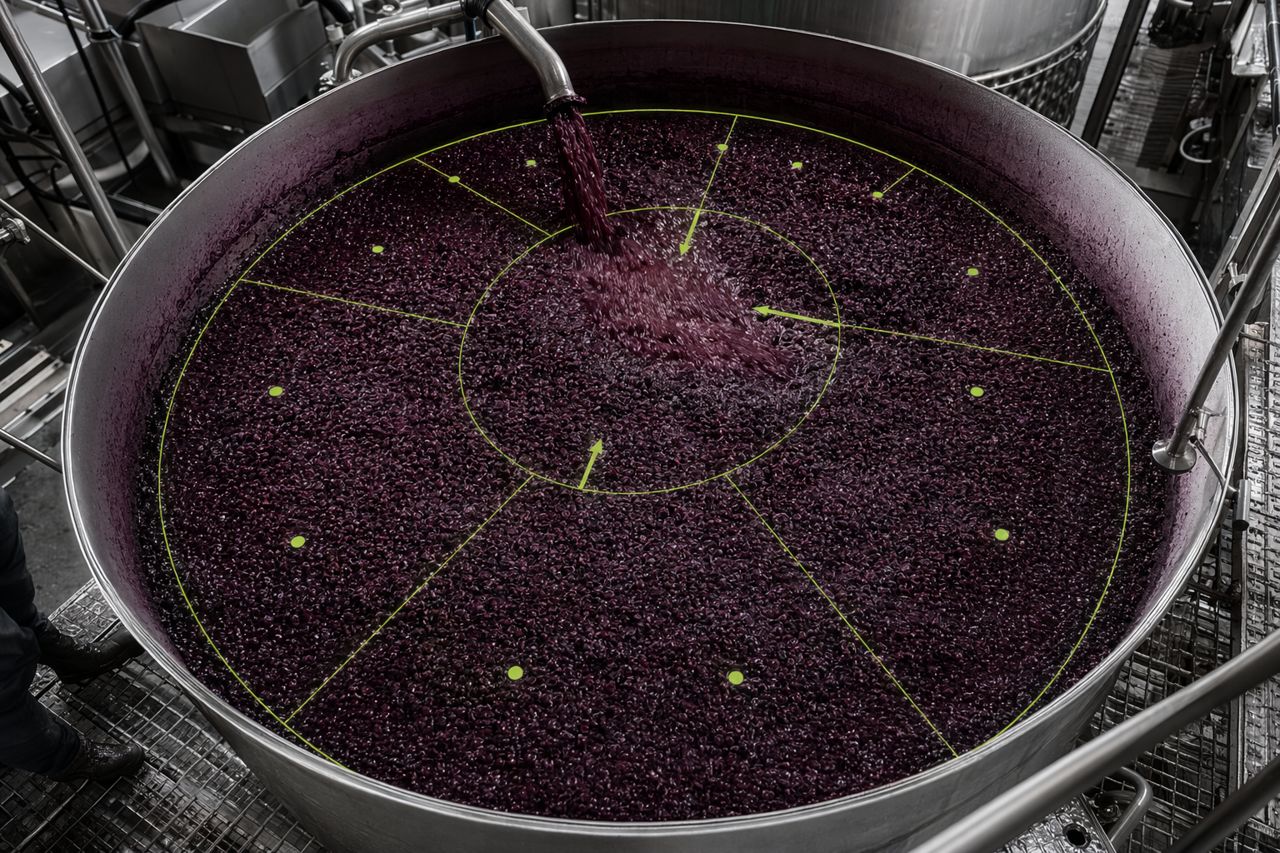
If pump-overs, punch-downs, or rack-and-return cycles are uneven, enzyme exposure can become uneven as well. In large tanks, the difference between a well-wetted cap and a channelled cap can show up later as extraction variability, heavier solids, or inconsistent press fractions.
For industrial red production, the strongest programs align:
- Enzyme addition point
- Must temperature
- Mixing intensity
- Cap wetting frequency
- Press cut strategy
- Clarification plan
- Filtration expectations
The operational goal is not maximum breakdown. It is controlled extraction with a cleaner path to stable wine.
Fruit condition should drive restraint
Cold soak is often used to build aromatic and color complexity, but not all fruit benefits from the same level of enzymatic support.
Use more caution when lots show:
- Botrytis pressure or sour rot risk
- High field dust or compromised skin integrity
- Excessive berry breakdown before crush
- Elevated microbial concern
- Already aggressive seed or skin tannin
In these situations, the best enzyme decision may be a narrower application, a later timing window, or a different clarification strategy. The lab, winemaking, and cellar teams should agree on the risk before the lot is treated.
What to monitor after addition
A practical enzyme program should make the cellar easier to run, not harder to interpret. Track observations that connect directly to production value.
In the tank
- Cap hydration and ease of movement
- Juice color development
- Must viscosity during pump-over
- Aroma cleanliness during cold soak
- Tannin texture during daily tasting
At pressing
- Free-run volume behavior
- Press cycle resistance
- Press fraction clarity and texture
- Solids carryover into receiving tanks
After pressing
- Settling speed
- Lees compaction
- Turbidity trend before filtration
- Filter pressure behavior
- Need for corrective clarification
These measurements help determine whether the enzyme program is improving total process efficiency or only shifting work downstream.
Choosing an enzyme supplier for wine production
For commercial wineries, supplier value is not only the product. It is the ability to support repeatable decisions under harvest pressure.
A useful supplier should help your team evaluate:
- Red variety and clone behavior
- Fruit maturity and skin condition
- Cold-soak duration and temperature target
- Tank geometry and cap management method
- Pressing style and fraction handling
- Clarification equipment and filtration targets
- Finished-wine sensory position
Véraison Current supports enzyme selection around cellar outcomes: extraction control, press efficiency, clarification behavior, filtration readiness, and sensory protection.
A practical decision framework
Use this sequence before the fruit arrives:
- Define the wine target: plush, structured, fresh, high-color, early-release, or age-worthy.
- Segment fruit risk: clean, variable, fragile, or compromised.
- Select the timing window: crush, post-cold-soak, or early fermentation.
- Match cap management: ensure enzyme distribution follows the actual tank program.
- Set sensory checkpoints: color, aroma, tannin, and mouthfeel.
- Connect to downstream operations: press loading, settling, and filtration.
- Review after vintage: compare treated lots against yield, clarity, and cellar timing goals.
The cellar-grade takeaway
Cold soak is a window of opportunity, not a universal instruction. Enzymes can help an industrial winery unlock color, improve juice recovery, reduce clarification load, and protect filtration throughput — but only when timing, fruit condition, and cap management are aligned.
For red wine production, the best enzyme program is controlled, observable, and built around the lot’s commercial destination.
Request a quote
Planning enzyme decisions for the coming crush? Share your varietals, tank sizes, cold-soak practices, press setup, and clarification goals through our on-site request form. Véraison Current will help match the right enzyme approach to your production plan.