Botrytis-Affected Grapes and Filtration Risk: What Commercial Wineries Should Track at Intake
Botrytis fruit does not create one problem. It creates a moving target.
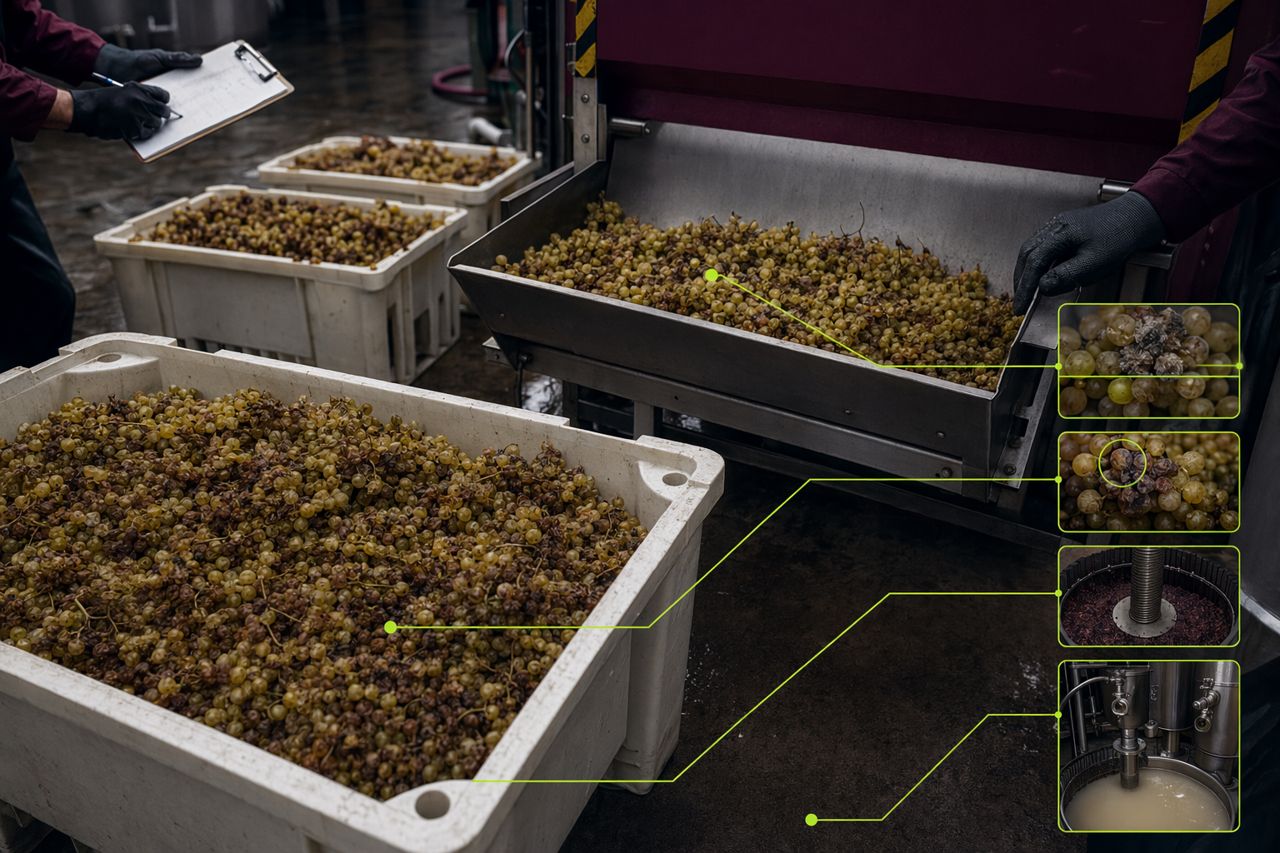
At commercial scale, a load that looks manageable at the crush pad can become a slow press cycle, a stubborn clarification tank, a filtration bottleneck, or a sensory risk downstream. The operational issue is not only rot percentage. It is what botrytis changes in the must: soluble glucans, damaged berry structure, higher colloidal load, oxidative pressure, uneven extractability, and more unpredictable settling behavior.
For an industrial winery, the goal is not to overreact to every compromised parcel. The goal is to identify which lots are likely to consume cellar time, filter capacity, tank space, and QA attention before those costs are locked into the schedule.
Véraison Current works as an enzyme supplier for wine production with a focus on practical cellar outcomes: improved extraction control, faster clarification decisions, reduced filtration load, and more predictable processing under harvest pressure.
Why botrytis fruit increases filtration risk
Botrytis cinerea affects grape tissue before the winery has a chance to manage it. Once berries are softened, split, or partially dehydrated, the must can carry a higher burden of colloids and soluble material that resists normal settling and filtration.
The key production concern is beta-glucan contribution from fungal growth. These glucans can increase viscosity and interfere with clarification and filtration. In a plant running tight harvest throughput, that can translate into:
- Slower settling or flotation response
- Higher lees volume than expected
- Persistent haze after normal clarification windows
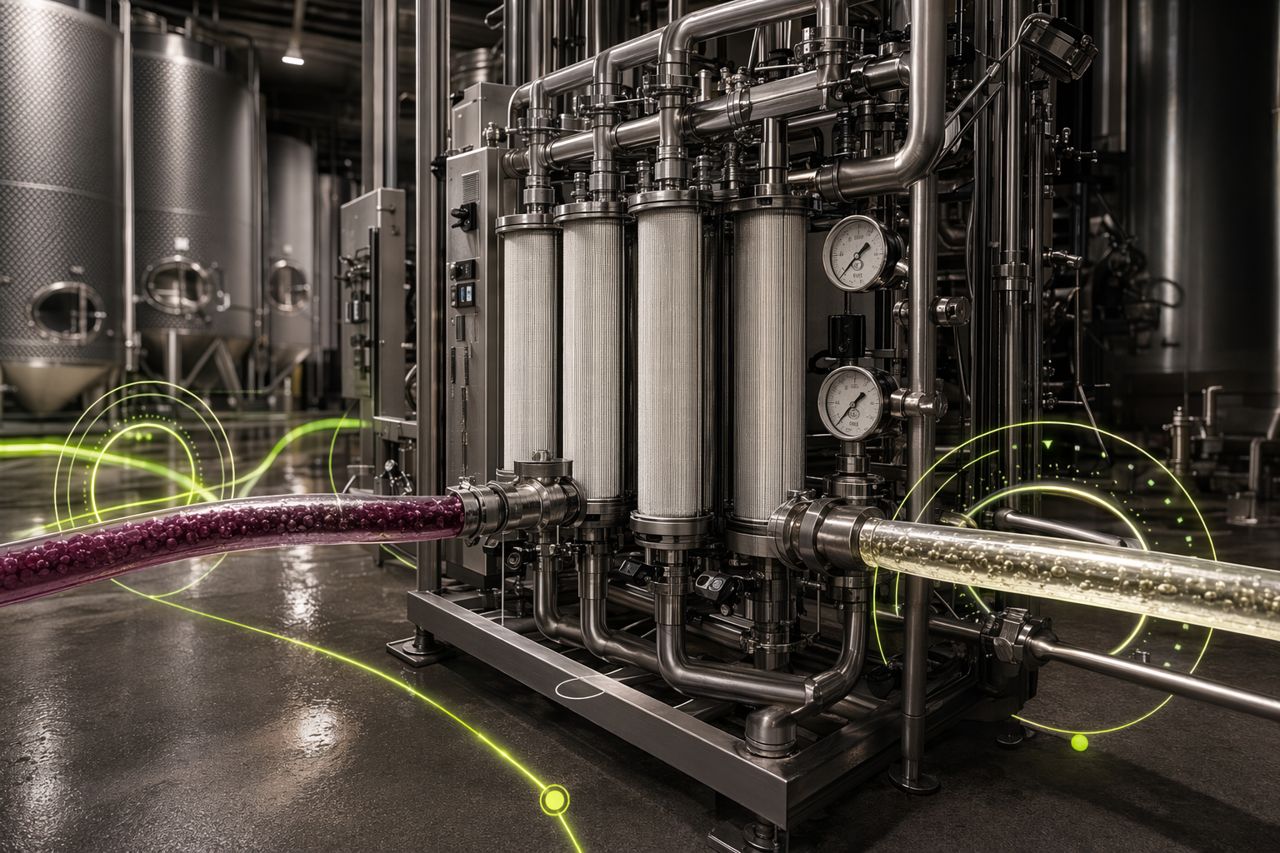
- Increased filter pressure rise
- Shorter filtration runs
- More frequent media changes or membrane stress
- Delayed tank turns
- Higher risk of oxygen exposure during rework
The filtration issue often appears late, but the signal usually starts at intake.
Intake tracking should separate visual rot from processing risk
Visual grading matters, but it is not enough. Two loads with similar botrytis appearance may behave very differently depending on variety, berry condition, vineyard block, harvest moisture, skin integrity, and how long the fruit sat before processing.
At intake, track indicators that connect directly to cellar performance.
1. Botrytis incidence by lot, not just by vineyard
Record compromised fruit by delivery lot. If trucks are blended too early in the log, the winery loses the ability to connect intake condition to tank behavior.
Useful operational fields include:
- Block or grower source
- Harvest date and delivery sequence
- Visual botrytis band
- Presence of sour rot or split berries
- Berry dehydration level
- Juice color shift at crush
- Aroma flags at receival
The point is not to create paperwork. It is to preserve traceability before clarification and filtration decisions become guesswork.
2. Berry breakdown and free-run character
Botrytis fruit often releases material differently. More fragile berries can increase suspended solids early, while dehydrated berries may extract unevenly and complicate press cuts.
At receival and crushing, note:
- Degree of berry collapse
- Stickiness or rope-like flow in juice streams
- Solids carryover into free-run fractions
- Early haze density
- Abnormal color pickup in white or rosé programs
- Any oxidative browning tendency
These observations help the cellar decide whether a lot needs faster clarification support, separated press fractions, or a more conservative blending path.
3. Press behavior under load
Press yield is not only a yield metric. With botrytis fruit, the press can become the first major warning system for downstream filtration.
Track:
- Fill and drain behavior
- Cycle extension compared with clean fruit
- Difficulty separating fractions
- Press fraction haze
- Compaction and drainage resistance
- Whether higher-risk fractions are entering the main blend
If botrytis-heavy lots are pressed aggressively without separation discipline, the winery may gain short-term volume and inherit long-term filtration drag.
Clarification behavior is the early warning for filtration load
A botrytis-affected lot that refuses to clarify is telling the cellar something before the filter does.
Watch the clarification curve, not only the endpoint
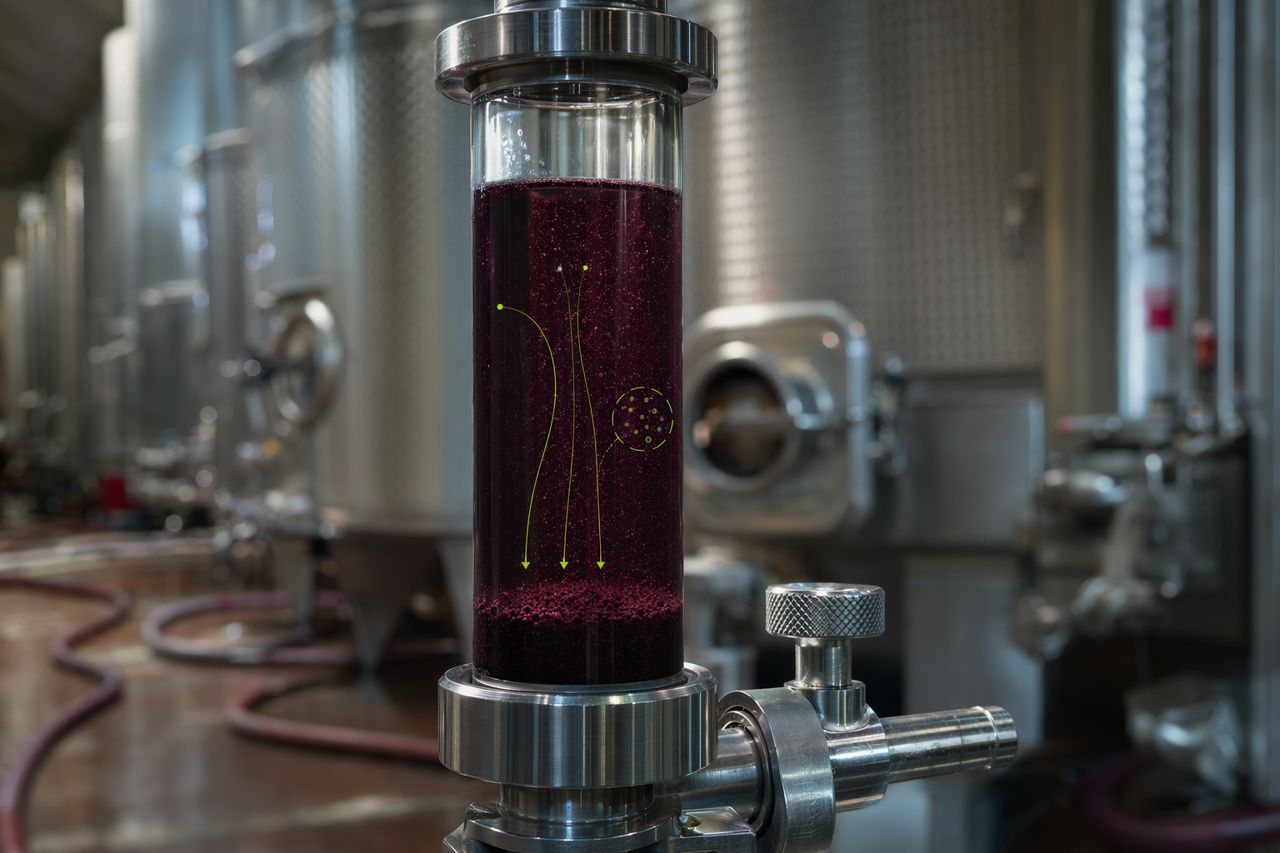
Commercial wineries should track how the must clarifies over time: whether solids drop cleanly, whether haze remains suspended, and whether the tank shows a broad colloidal layer instead of compact lees.
Key cellar observations include:
- Initial turbidity category by lot
- Settling speed relative to normal fruit
- Compactness of lees
- Persistence of upper-tank haze
- Response to flotation or cold settling
- Need for additional racking or treatment
A slow clarification curve usually means the filtration plan should be adjusted before the wine reaches the line.
Build a risk map for the cellar schedule
During harvest, the highest-risk lots are not always the most visually damaged. They are the lots that combine compromised fruit with weak settling, high solids, and difficult press behavior.
A simple risk map can help production teams decide which tanks require:
- Earlier enzyme review
- Separate press fraction handling
- Additional clarification time
- More conservative blending
- Priority filterability checks before bottling schedule pressure builds
This is where intake records become an operations tool instead of a compliance archive.
Where enzyme strategy fits
Enzymes cannot make poor fruit clean, and they should not be used as a blanket correction for every botrytis lot. They are most valuable when the winery has identified a specific processing barrier: colloidal load, glucan-related filtration resistance, slow clarification, or difficult extraction control.
A cellar-grade enzyme strategy for botrytis-affected fruit typically focuses on:
- Supporting breakdown of problematic soluble glucans
- Improving juice release and press efficiency where appropriate
- Reducing suspended colloidal load before filtration
- Helping clarification steps perform more predictably
- Protecting throughput by reducing rework and line stoppages
The best timing depends on the production goal, variety, fruit condition, temperature environment, and whether the target is juice handling, fermentation management, or pre-filtration conditioning.
Véraison Current supports wineries with practical product selection and application planning for harvest realities. The conversation should start with the lot condition and the bottleneck you are trying to prevent.
What commercial wineries should flag for supplier review
When requesting enzyme support for botrytis fruit, the most useful information is operational, not academic. Share what the cellar is seeing.
Bring these details to the discussion:
- Variety and wine style
- Fruit condition at intake
- Botrytis severity and presence of other rot
- Crushing and pressing approach
- Whether fractions are separated
- Clarification method and observed response
- Fermentation status if already underway
- Filtration stage where pressure or flow problems appear
- Whether the issue is recurring by block, grower, or variety
This allows the enzyme recommendation to match the production problem instead of forcing a generic treatment into a specific cellar constraint.
Practical intake checklist for botrytis filtration risk
Use this as a quick screen during harvest intake and early processing.
High-priority warning signs
- Sticky, viscous, or rope-like juice flow
- Slow drainage in the press
- Broad, loose lees after settling
- Haze persistence despite normal clarification time
- Large difference between free-run and press fraction clarity
- Rapid filter pressure rise on comparable lots
- Repeated trouble from the same block or delivery window
Operational responses to consider
- Keep high-risk lots traceable through early cellar steps
- Separate press fractions when filtration risk is elevated
- Avoid blending compromised fractions before clarification behavior is understood
- Review enzyme strategy before the filtration bottleneck appears
- Confirm filterability before committing tank space to a packaging schedule
- Document the final cellar outcome against the intake notes
The strongest programs close the loop. They compare intake condition, clarification behavior, enzyme decisions, filtration performance, and finished wine risk by lot.
The buyer value: fewer surprises between crush pad and filter line
For production teams, botrytis risk is expensive because it hides in time. It shows up as delayed settling, extra rackings, slower filtration, schedule compression, and avoidable handling.
A practical enzyme program gives wineries a way to manage that risk earlier. The value is not a lab claim in isolation. It is a cleaner decision path:
- Which lots need treatment?
- Which fractions should stay separate?
- Which tanks require more clarification time?
- Which wines should be checked before they reach the filter?
- Which harvest patterns should change next season’s receiving plan?
That is the difference between reacting to a blocked line and managing risk from intake.
Request enzyme support for botrytis-affected fruit
If your winery is receiving botrytis-affected grapes or seeing filtration instability from compromised lots, Véraison Current can help you review the processing risk and match an enzyme approach to the cellar objective.
Request a quote through the on-site form and include the variety, lot condition, clarification behavior, and where the bottleneck is appearing.