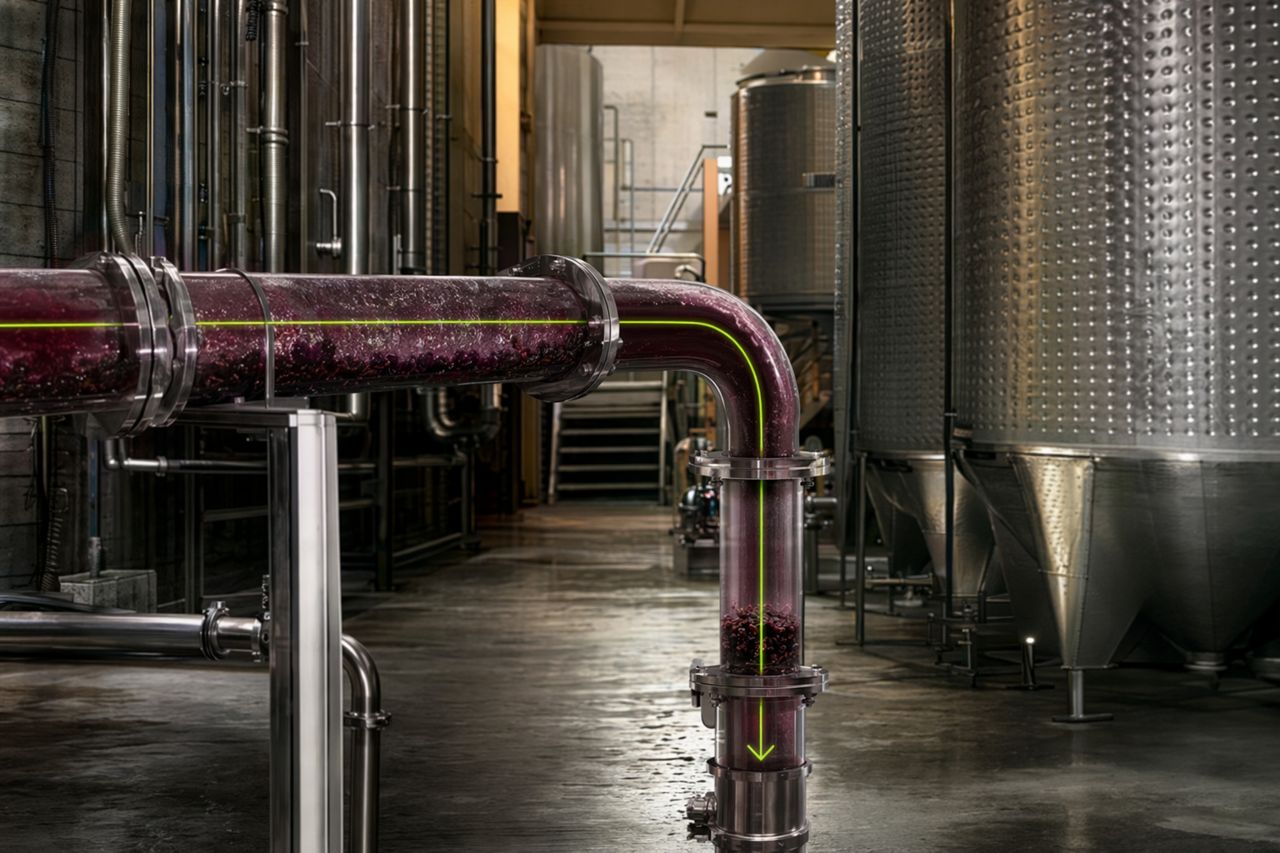
Bulk Enzyme for Wine Clarification
Cleaner settling. Tighter lees. Lower filtration pressure.
Véraison Current supplies bulk enzyme solutions for commercial wineries managing red and rosé clarification at production scale. Our wine clarification enzymes are selected for the real constraints of harvest: variable fruit condition, compressed tank schedules, pectin-driven haze, slow solids separation, and filtration programs that cannot afford surprises.
For buyers searching for an enzyme supplier for wine production, this page focuses on one practical job: helping cellar and QA teams reduce pectin-related turbidity before it becomes a throughput, yield, or membrane-load problem.
Built for red and rosé clarification bottlenecks
Pectin and colloidal load can slow clarification even when fruit intake, press fractions, and tank movements are well controlled. In red and rosé programs, that risk often shows up as:
- Sluggish settling after maceration, pressing, or cold hold
- Loose, high-volume lees that trap recoverable wine
- Persistent haze after racking
- Higher centrifuge or crossflow demand
- Premature filter blinding
- Extra cellar handling that increases oxygen and sensory risk
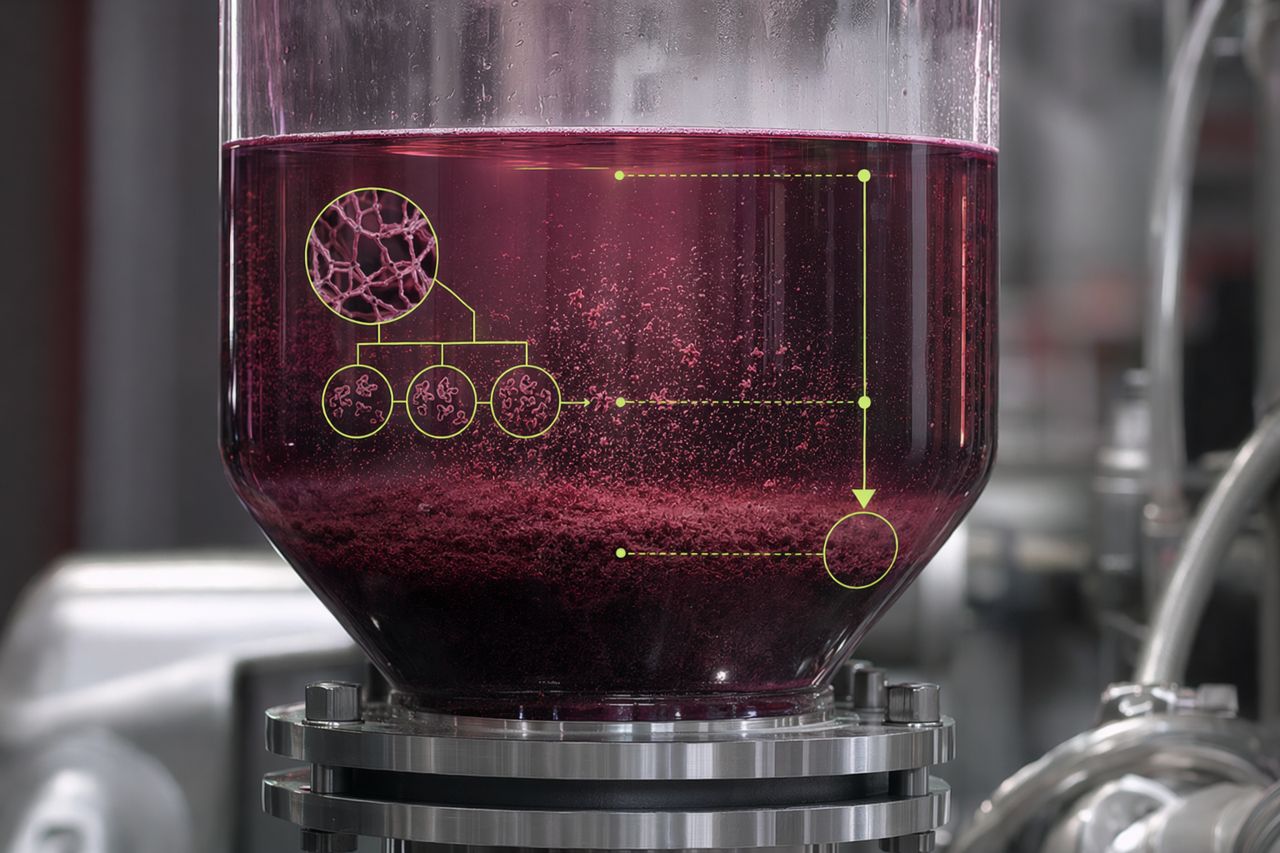
A properly matched clarification enzyme helps break down pectic structures that keep suspended solids and colloids in motion. The result is more predictable settling behavior, better lees compaction, and a cleaner path into downstream stabilization and filtration.
What Véraison Current helps you improve
Faster clarification decisions
When pectin load is reduced, cellar teams can make racking and transfer calls with more confidence. That supports tighter tank rotation during peak harvest and fewer delays waiting for difficult lots to clear.
Better wine recovery from lees
Compact lees reduce the volume of wine held in the solids layer. For industrial wineries, even small improvements in recoverable wine can matter across multiple lots, shifts, and tanks.
Lower pre-filtration risk
Clarification enzyme use can reduce the burden placed on centrifuges, depth media, and membrane filtration. Cleaner feed streams help protect filtration capacity, reduce changeover stress, and support planned bottling or bulk dispatch windows.
Controlled sensory impact
Wine clarification is not just a separation step. Over-processing, extended holding, and repeated movements can affect aroma, color impression, and mouthfeel. Our approach supports clarification while keeping sensory intent and varietal character in view.
Where it fits in the cellar
Véraison Current bulk enzyme programs may be evaluated around:
- Red must handling and post-maceration clarification
- Rosé juice clarification before fermentation
- Press fraction management
- Thermovinification or rapid extraction workflows
- Settling support before centrifuge or filtration
- Difficult lots with high pectin or unstable haze behavior
We work with production, lab, and procurement teams to align enzyme selection with fruit condition, contact time, temperature realities, tank logistics, and downstream clarification targets.
Bulk supply without generic advice
Industrial wineries do not need vague enzyme recommendations. They need supply continuity, batch-to-batch consistency, and technical conversations that match the way the cellar actually runs.
Véraison Current supports bulk enzyme purchasing with:
- Production-fit enzyme selection for red and rosé clarification
- Documentation for internal QA and purchasing review
- Practical guidance for trial planning and cellar validation
- Scalable supply for seasonal demand and recurring programs
- Packaging and delivery planning aligned with winery operations
We do not position enzyme use as a cure-all. We help you identify where pectin-related turbidity is creating measurable operational drag, then support a controlled enzyme program that can be evaluated against your own clarification, recovery, and filtration goals.
Technical focus: pectin-driven clarification problems
Pectin can create persistent viscosity and colloidal suspension, especially in lots with ripe fruit, mechanical harvesting, extended skin contact, or press fractions carrying more structural material. When these compounds remain intact, solids separation becomes less predictable and downstream equipment carries a higher load.
Clarification enzymes target those pectic barriers so suspended material can settle or separate more efficiently. For QA and lab teams, the value is not just clearer wine in a glass. It is repeatable process behavior: reduced haze persistence, cleaner racking interfaces, improved lees definition, and better feed quality into filtration.
Quote information that helps us respond quickly
To prepare a relevant quote, share the operational details you already use in production planning:
- Wine type and target use: red, rosé, bulk, bottle-ready, or intermediate
- Approximate seasonal or campaign volume
- Current clarification step and pain point
- Fruit condition or varietal pattern if relevant
- Existing equipment sequence, such as settling, centrifuge, or filtration
- Preferred delivery timing and purchasing cadence
If you are comparing suppliers, tell us what matters most: cost-in-use, supply reliability, clarification speed, wine recovery, filter protection, or technical support.
Request a quote
Ready to evaluate bulk enzyme for wine clarification in your cellar program? Use the on-site form and our team will respond with a production-oriented quote and next-step questions for your application.